
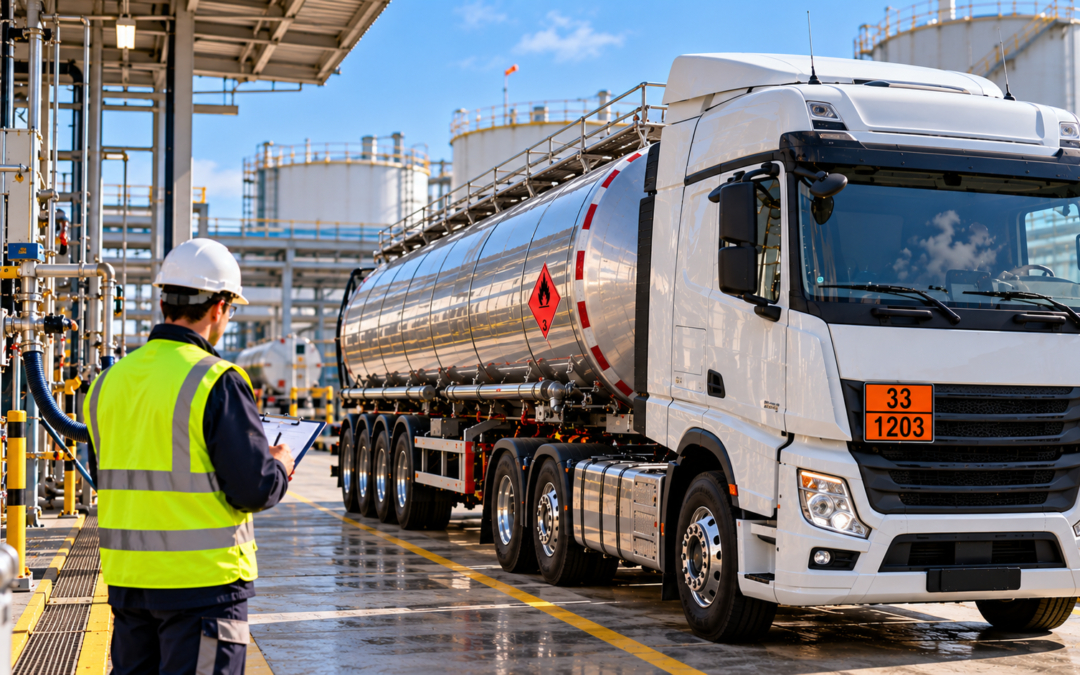
The ADR 2027 edition introduces a substantial package of amendments for the international carriage of dangerous goods by road, with particularly important developments concerning lithium and sodium-ion batteries, hydrogen technologies, damaged batteries, empty uncleaned packagings, recycled plastics, driver training and vehicle safety. ADR 2027 applies from 1 January 2027, although the general transitional provision allows ADR 2025 to continue to be used until 30 June 2027 unless a specific provision states otherwise.
As with previous biennial revisions, many amendments are highly technical and will primarily affect specialists working with particular substances, tanks, packagings or vehicle types. Several changes, however, have a much broader operational impact. Battery logistics continues to occupy an increasingly important position within ADR, while the 2027 edition also responds to the growing use of hydrogen technologies and introduces practical changes for packaging, training and return logistics. UNECE itself identifies batteries, emerging hydrogen solutions, recycled plastics and strengthened vehicle safety requirements among the main themes of the new edition.
New UN numbers for batteries installed in cargo transport units
One of the most visible changes concerns batteries installed in cargo transport units. The development of large battery energy systems means that the existing provisions no longer adequately distinguish between the different battery chemistries encountered in practice.
ADR 2027 differentiates between lithium-ion, lithium-metal and sodium-ion batteries installed in cargo transport units. UN 3536 is retained for lithium-ion batteries installed in a cargo transport unit, while UN 3563 is introduced for lithium-metal batteries installed in a cargo transport unit and UN 3564 for sodium-ion batteries installed in a cargo transport unit. This means that companies involved in battery energy storage systems and similar installations will need to review classification, documentation and vehicle or container marking rather than automatically continuing to use the previous entry.
This development is particularly relevant to the energy storage sector. Containerised battery systems have become increasingly common at industrial sites, renewable energy projects and electricity infrastructure. Although such units may resemble ordinary freight containers externally, their dangerous goods classification is determined by the batteries installed within them. ADR 2027 provides a more precise distinction between the battery technologies and consequently improves the information available during transport and emergency response.
Hybrid lithium-ion and sodium-ion batteries
ADR 2027 also responds to technological developments in battery chemistry. Batteries do not necessarily consist exclusively of one type of cell, and systems containing both lithium-ion and sodium-ion cells are becoming technically possible.
New special provision 410 establishes rules for batteries containing both lithium-ion and sodium-ion cells. Depending on their configuration, these hybrid batteries are assigned to UN 3480, UN 3481 or UN 3536. Where the relief provided by special provision 188 is used, the applicable energy conditions and marking requirements must also be met.
For consignors, this means that battery classification increasingly requires knowledge of the actual cell chemistry and construction of the battery rather than simply identifying a product commercially as a rechargeable battery. Manufacturers and distributors should therefore ensure that technical product information provides sufficient detail for the correct ADR classification.
Important changes for damaged and defective batteries
Damaged and defective lithium batteries remain one of the more challenging areas of dangerous goods transport because certain batteries can develop conditions capable of causing fire, rapid heat release, gas generation or other hazardous effects during carriage.
ADR 2027 introduces special provision 680 for lithium-metal, lithium-ion and sodium-ion batteries. The provision is linked to the use of specialised packagings under packing instruction P911 and large packagings under LP906. Where packaging is used under specified conditions established through the packaging performance assessment, the consignor must provide the loader and carrier with a description of the surrounding conditions under which that packaging may be used and carried. This information must accompany the transport document.
This is operationally significant for battery manufacturers, recycling companies, repair centres, waste companies and organisations dealing with returned battery-powered equipment. It is no longer sufficient in these circumstances simply to select an approved specialist packaging solution; the conditions associated with its safe use may also become part of the information that has to move through the transport chain.
Companies handling damaged batteries should therefore review their acceptance procedures, packaging instructions and communication between consignor, packer, loader and carrier before ADR 2027 becomes mandatory.
ADR 2027 responds to hydrogen logistics
Hydrogen technology is another area in which the regulations are evolving. ADR 2027 contains provisions addressing Liquid Organic Hydrogen Carriers (LOHCs), which can be used to chemically store and transport hydrogen.
New special provision 413 establishes criteria relevant to substances used as LOHCs, including a threshold relating to physically dissolved hydrogen. The amendment helps distinguish when these substances fall within the dangerous goods provisions and reflects the increasing practical relevance of alternative methods for storing and transporting hydrogen.
Changes are also made to provisions concerning composite pressure receptacles designed for compressed hydrogen. These developments illustrate a wider trend within dangerous goods regulation: the energy transition is introducing technologies that do not always fit neatly into regulatory structures originally developed around conventional fuels and industrial chemicals.
For chemical logistics companies, hydrogen therefore deserves attention beyond conventional compressed-gas transport. LOHC technology, hydrogen-powered vehicles and new pressure systems are gradually becoming part of the regulatory landscape.
More flexibility for empty, uncleaned packagings
ADR 2027 also addresses a very practical problem encountered in waste management and return logistics: the transport of empty, uncleaned drums and IBCs that still contain residues but whose normal service or inspection period has expired or for which complete packaging documentation is no longer available.
Under defined conditions, large empty packagings with a capacity exceeding 150 litres may be carried for disposal, recycling or material recovery even where certain normal requirements concerning period of use, inspection or documentation can no longer be satisfied. This relief is not universal. Several higher-risk classes and substances are excluded, including substances of packing group I and specified dangerous goods presenting particular hazards. The packaging must also remain properly closed and leakproof and retain the required markings corresponding to its residues.
This is an important practical improvement for the circular economy. An old IBC containing a small residue of a chemical can be difficult to return for recycling when its inspection date has expired. The previous situation could create the paradox that the packaging needed to be transported precisely because it was at the end of its useful life, while its regulatory status made that return transport difficult.
The new provisions provide more flexibility without creating a general exemption for contaminated empty packagings.
Recycled plastics receive greater attention
Sustainability is also visible in the packaging provisions. ADR 2027 introduces or revises provisions enabling the use of recycled plastics material, including applications involving flexible intermediate bulk containers, while maintaining controls intended to ensure that packaging performance remains reliable. UNECE specifically identifies the use of recycled plastics as one of the significant developments in the 2027 edition. UNECE
This is more complicated than simply allowing manufacturers to substitute virgin plastic with recycled material. Dangerous goods packagings have to retain predictable mechanical and chemical properties throughout their intended use. Recycled material therefore needs appropriate quality assurance, traceability and verification so that variations in material composition do not compromise the performance demonstrated by the approved design type.
The amendment is an interesting example of ADR adapting to circular-economy objectives while maintaining the fundamental principle that sustainability cannot reduce the safety performance required of dangerous goods packaging.
Changes to ADR training
Training is another area receiving attention in ADR 2027. In particular, the new edition creates a clearer framework for distance learning and e-learning in ADR driver refresher training under Chapter 8.2. The changes make it possible, subject to the applicable approval and organisational requirements, for refresher training to make use of online learning formats.
There is also a relevant amendment to Chapter 1.3 concerning persons involved in dangerous goods activities. The wording of 1.3.1 is broadened from the previous reference to persons employed by participants in Chapter 1.4 to persons participating in the activities referred to in Chapter 1.4. ADR 2027 also clarifies that the term “personnel” in the training provisions includes any person performing the corresponding role or function, and the record-keeping provisions in 1.3.3 are adjusted accordingly.
This is important, but it should not be misinterpreted as meaning that ADR 2027 introduces for the first time a requirement to train employees before they start their dangerous goods duties. ADR already required persons to receive the appropriate training before assuming responsibilities, with untrained persons only performing such functions under the direct supervision of a trained person. The 2027 amendment primarily clarifies and broadens the wording so that the provisions are less dependent on a conventional employer-employee relationship.
For companies using agency workers, contractors or other persons carrying out ADR-related functions, this broader wording is nevertheless a good reason to review how Chapter 1.3 training is assigned and documented.
New instructions in writing
The Instructions in Writing carried in the vehicle are also being revised. Several descriptions in the standard instructions are changed, including terminology used to describe hazards and possible effects. Carriers will therefore eventually need to ensure that drivers have the ADR 2027 version available in the vehicle. There is, however, a specific transitional provision. The existing instructions in writing may continue to be used until 31 December 2027, giving carriers additional time to replace them.
This may appear to be a relatively minor administrative change, but experience with previous ADR revisions shows that outdated Instructions in Writing are an easily identifiable compliance issue during roadside inspections. Fleet operators should therefore include replacement of the document in their ADR 2027 implementation plan rather than waiting until the end of the transitional period.
Vehicle safety continues to develop
ADR 2027 also contains changes in Part 9 relating to vehicle construction and safety. These include developments concerning alternative propulsion technologies as well as measures intended to reduce the consequences of vehicle fires and impacts. UNECE describes strengthened vehicle safety requirements as one of the themes of the new edition.
Work in this area includes requirements associated with automatic engine fire suppression, thermal protection against tyre fires and protection of tanks against damage. These measures are particularly relevant because experience with severe tanker incidents has demonstrated that a vehicle fire can escalate into a much larger event when heat affects the tank and its contents.
At the same time, ADR is increasingly accommodating battery-electric and hydrogen fuel-cell vehicles for dangerous goods transport. This development is necessary as transport fleets decarbonise, but alternative propulsion introduces different energy-storage and fire scenarios that must be considered in the technical requirements for ADR vehicles.
What should companies do before 1 July 2027?
For most companies, the practical response to ADR 2027 should begin with determining which amendments actually affect their operations. A chemical distributor transporting conventional packaged dangerous goods may encounter relatively few major operational changes, while a battery recycler, packaging manufacturer, tanker operator or company using hydrogen technology may need considerably more preparation.
Dangerous Goods Safety Advisers should review classifications, procedures, transport documents, packaging instructions and training materials against the new edition. Organisations handling lithium, sodium-ion or hybrid batteries should pay particular attention to the new UN entries and special provisions 410 and 680. Companies returning empty contaminated drums and IBCs should examine whether the new provisions can legitimately be applied to their waste and return flows, while carriers need to plan for the revised Instructions in Writing and relevant vehicle requirements.
Training materials should also be updated. This is especially important because ADR changes do not only affect ADR drivers. Consignors, packers, loaders, fillers, unloaders, carriers and other persons whose work concerns the carriage of dangerous goods may require updated function-specific knowledge under Chapter 1.3.
ADR 2027 becomes applicable on 1 January 2027, with the general transition allowing continued use of ADR 2025 until 30 June 2027. Companies should regard that six-month period as implementation time rather than as a reason to postpone preparation.
ADR 2027 reflects a changing chemical logistics sector
The 2027 revision does not fundamentally redesign ADR, but it does reveal where dangerous goods transport is changing most rapidly. Battery technology is developing beyond conventional lithium-ion systems, containerised energy storage is becoming more common, hydrogen technologies are moving into practical logistics applications and circular-economy objectives are influencing both packaging and return transport.
At the same time, ADR continues to refine familiar areas such as training, documentation, tank and vehicle safety and the handling of damaged goods. The result is an edition containing many detailed amendments but also several changes with direct operational consequences.
For organisations involved in chemical logistics, the most important task is therefore not simply to obtain a new copy of ADR. They need to identify which changes affect their own products, roles and transport processes and translate those changes into classification decisions, procedures, documentation and training. That review should take place before ADR 2027 becomes fully mandatory on 1 July 2027.